The safety net you remove when onboarding goes online
A few years ago a salesperson messaged me in the middle of onboarding a new client. The client had opened their setup page and got nothing back. No form, no error message, a blank white screen, with a customer sitting there watching it load into nothing.
I went looking, and the cause had nothing to do with onboarding. The running code was one version behind a change to the database. Someone had updated the shape of the data. The deployed software still expected the old shape, so the page fell over trying to read it. The fix took about a minute. I redeployed the latest version and the page came back (one button, which is the least heroic kind of fix there is). It rarely happened, because the database was old and stable and changes to it were rare.
A person caught that break before it cost us anything. That is the part I want you to notice. The salesperson saw the blank screen, told me, and I had it fixed before the client formed any opinion about the product. Picture the same break with the client onboarding themselves online, late at night, nobody from our side watching. Same blank screen. This time there is no salesperson to notice, and no message to me.
That is the thing nobody puts on the pricing page about online onboarding.
Onboarding a client sits on a range. At one end a person does the whole thing by hand. At the other end software does the whole thing and no human is involved. Most companies want to slide toward the software end, because a person onboarding each client one at a time does not scale and costs a salary. Fair enough. But every step along that range quietly moves a job from a person to your system. Here is the job.
A person does all of it. Someone sits with the client, screen to screen, and walks them through setup. It is slow and it does not scale. It also catches almost everything, including breaks that have nothing to do with onboarding, like my blank page. The human is a general-purpose problem detector sitting next to the client.
A person watches, the software leads. The client clicks through a guided flow themselves, and a salesperson or support person is alongside, ready to step in. This is where my story happened. The software did the work, and a human was still close enough to see the screen go blank and raise a hand.
The software leads, a person is on call. Now the client does it alone, and a human only appears if the client asks for help. The catch here is that a client staring at a blank screen often does not ask for help. They assume the product is broken or that they did something wrong, and a good share of them just leave. The break still happens. The difference is that now you might never hear about it.
Nobody is there. Fully online, self-serve, at any hour. This is the cheapest to run, and the one every founder wants. It is also the one where my one-minute fix becomes an invisible lost customer. The blank page still shows up now and then. There is simply no person left in the loop to see it.
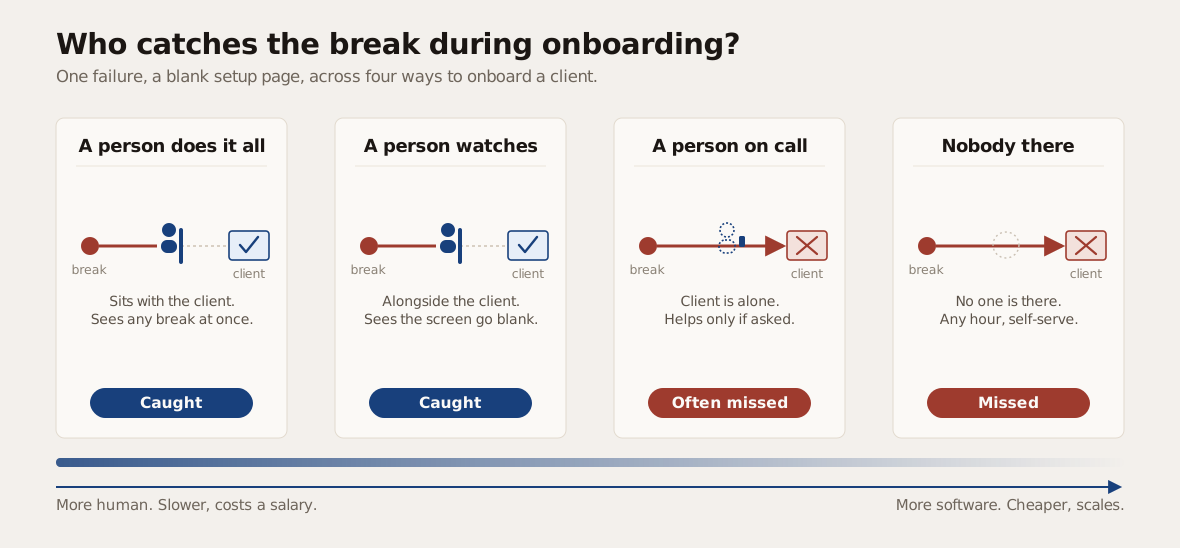
Here is the part that matters. Sliding toward self-serve does not remove the work of catching that break. It moves the work off a person and onto your software, whether or not you built the software to do it. If you did not build it, you did not save the cost. You shipped the cost to the client, in the form of a blank screen they will not tell you about.
Which brings me to where this is heading now. A lot of teams are putting an AI agent in charge of onboarding, and it feels like putting a person back in the loop. In the demo it looks exactly like that. The agent chats with the client and walks them through the steps, and everyone watching nods along.
But the agent is only watching for the things you built it to watch for. My break lived down in the plumbing, where the code and the database disagreed about the shape of the data. A friendly chatbot has no way to see that. It will walk a client all the way to a blank screen and keep chatting, unless something underneath it is checking the data too.
The salesperson who pinged me was doing a job that never showed up in a job description. Take them out of onboarding and the job does not close. It goes unstaffed. Someone still fills it, even when you never decide who, and most of the time that someone is the client. You find out later, from the churn report.
Changes to this post
Published.
Get the next one straight to email. Free.
No trackers. One email when there's a new post, nothing else (I dislike a cluttered inbox as much as you do). Unsubscribe anytime.